A house &
its history.
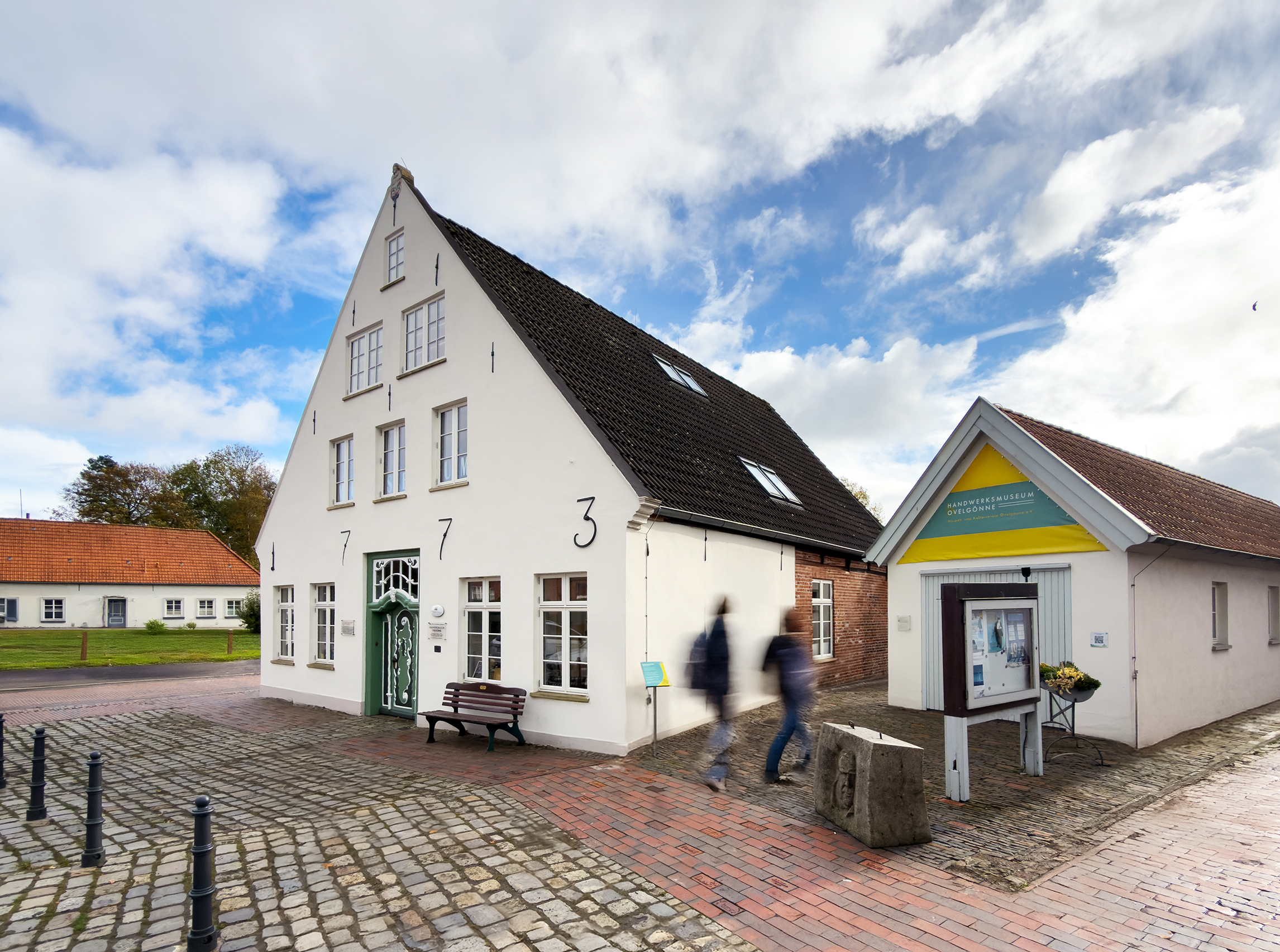
The historic townhouse of Ovelgönne: a living learning place, open meeting space, and our largest exhibit all at once.
Discover the houseWe are not a silent archive. We are a living place of encounter, where history is not only preserved but truly experienced.
As a non-profit cultural institution in the spirit of the ICOM (International Council of Museums), we see ourselves as a permanent institution in the service of society. We collect, preserve, research, interpret, and present the tangible and intangible cultural heritage of crafts in the Wesermarsch region, for the present and for all future generations.
Our museum is more than a collection of objects. It is a place where people come together, ask questions, and history comes alive. We stand for an open, inclusive, and ethically acting cultural institution that reflects the diversity of its community, driven by volunteering, passion, and the deep belief that regional cultural history concerns everyone.
Architecture & Atmosphere
The historic townhouse.
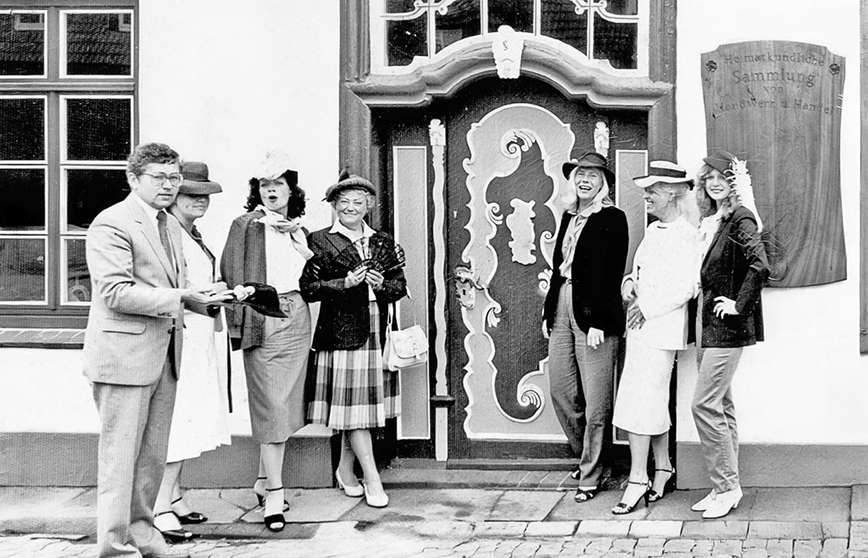
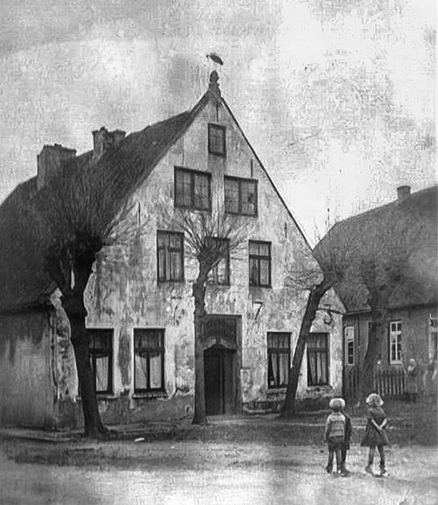
The listed Oldenburg gabled house was built in 1773 by the advocate and court usher Rumpf as a representative manor. With its characteristic architecture, creaking floorboards, and the patina that has grown over centuries, the building itself is our most important exhibit. An authentic testimony of northwestern German civic architecture of the 18th century awaits you.
Over its more than 250 years, the house has undergone a remarkable transformation: from a stately home through various private uses to the living museum of today. Every floorboard, every beam, and every room height carries the stories of those who once lived and worked here. This "Genius Loci", the spirit of the place, makes your visit an experience that goes far beyond merely looking at exhibits.
In the course of extensive renovation work, the protected house was carefully modernized without losing its historic character. The newly constructed outbuildings now house a fully functional historic forge as well as modern rooms for educational work, museum pedagogy, and our workshops. The tried and tested and the new enter into an exciting dialogue here, which you can experience up close.
Plan your visitwas built
the museum
history
the collection
members
Museum work according to ICOM
What we do every day.
The International Council of Museums (ICOM) defines five core tasks of every museum. Learn here how we bring them to life in Ovelgönne.
Collect
We systematically record and document everyday objects, tools, and craft materials from the Wesermarsch. Each object is inventoried and placed in its cultural-historical context, as tangible evidence of a living regional history.
Preserve
Professional conservation and proper storage secure our more than 11,500 objects for future generations. What is cared for today remains a memory tomorrow – and a basis for research the day after tomorrow.
Research
In close cooperation with the University of Oldenburg, we scientifically index the collection, write object biographies, and create new insights into the craft and everyday culture of the Wesermarsch.
Exhibit
On 400 m² of exhibition space, we present our collection in an authentic historical environment. Open, accessible, and inviting for all people, regardless of age, prior knowledge, or background.
Educate
Guided tours, hands-on workshops, school programs, and digital offerings bring history to life. We explain why old crafts are still relevant today, for children as well as for adults.
History & Milestones
From residential house to museum.
A house that carries the history of the Wesermarsch! From its construction in 1773 to the living present.
The Construction
Advocate and court usher Rumpf has the impressive Oldenburg gabled house built as a representative manor. The two-storey brick building with its striking stepped gable is an outstanding example of Northern German civic architecture of the 18th century. As one of the best-preserved townhouses of its time in the Wesermarsch, it is a listed monument today – and celebrated its proud 250th anniversary in 2023.
1773
1981
The Museum Foundation
On the initiative of the then municipal director Ingo Hashagen, the Crafts Museum Ovelgönne opens its doors for the first time on 31 May 1981 and is met with enormous interest from the population. What began as a local history collection quickly develops into an important regional cultural centre. The idea behind it was as simple as it was convincing: not to lock history behind glass, but to share it, explain it, and make it accessible to everyone.
The Sponsoring Association
The Heimat- und Kulturverein Ovelgönne e.V. takes over the sponsorship of the museum from the municipality, thereby securing its future in the long term. This transition marks the beginning of a new era: the museum becomes a true community project, supported by volunteer commitment, private funding, and a growing number of active members. Today, the association has over 85 members who keep the museum alive with time, expertise, and passion.
2000
2026
Museum on the Move
Following extensive renovations of the main building and the construction of a modern annex, the Crafts Museum today presents itself as a contemporary cultural venue combining tradition and innovation. A fully functional historical forge, modern workshop spaces for school classes and groups, and the gradual expansion of our digital offerings show: the museum is not just a place of remembrance, but a place of active doing.
Inclusion & Education
A Third Place for everyone.
The concept of the "Third Place" describes public spaces that are neither home nor the workplace. They are places where people can comfortably come together, meet, and exchange ideas. That is exactly what we want to be for you: an inviting meeting point for the entire community of Ovelgönne and far beyond.
For school classes, we offer age-appropriate guided tours and hands-on workshops. Here, children and young people can not only see historical craft techniques but try them out for themselves. The spectrum ranges from blacksmithing to traditional processing techniques and searching for clues in our permanent exhibition. We are convinced that history can be grasped much better with one's hands than exclusively from books.
We understand accessibility as an attitude and not just as a structural task. This includes tactile exhibits for people with visual impairments as well as simple language in our exhibition texts. Our growing digital offering also helps ensure that no one remains excluded from our cultural history, even if personal travel is not possible. We are consistently working on continuously improving your access to our heritage.
Discover educational offers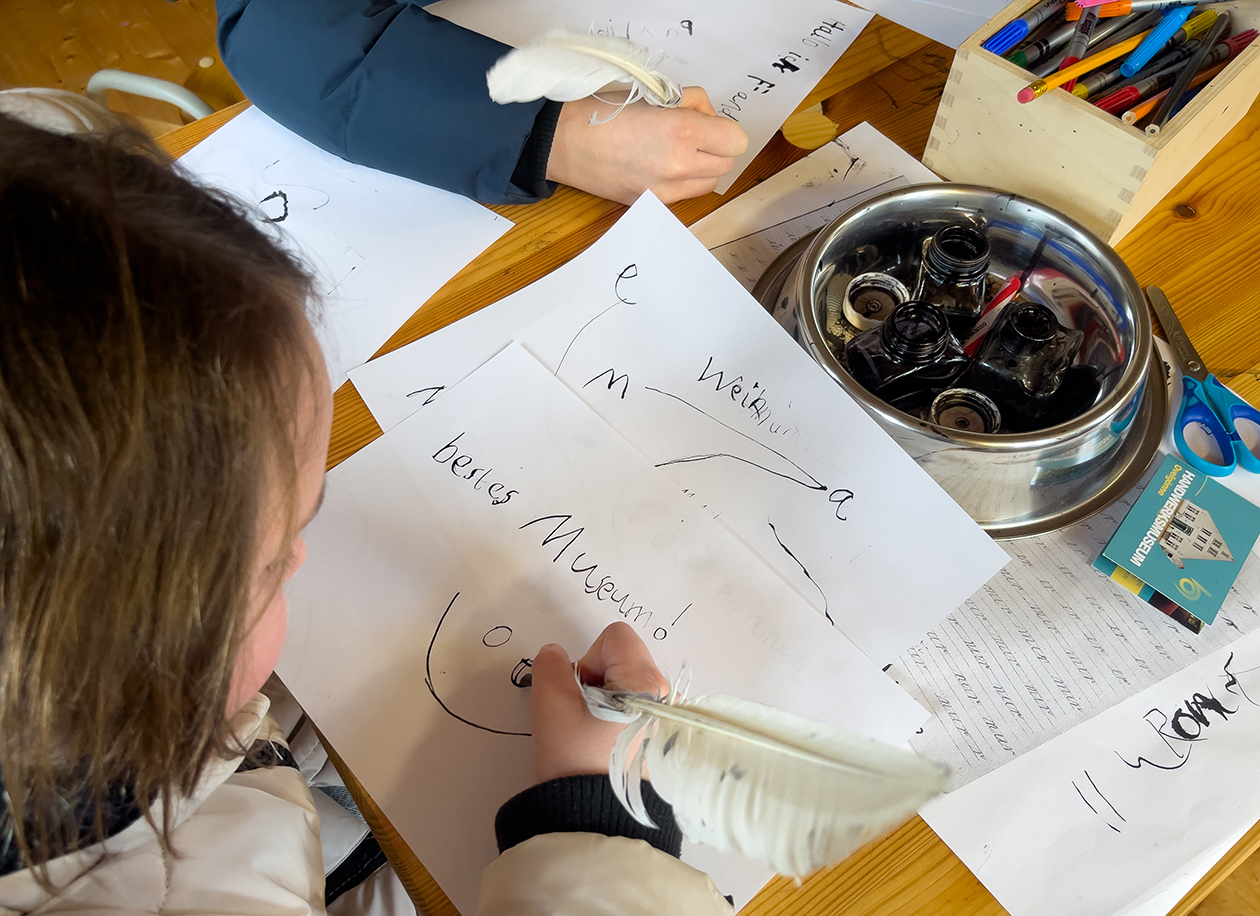
Our Principles
What we stand for.
We want to be more than a museum. As the cultural heart of the Ovelgönne community, we promote the exchange between generations, traditions, and perspectives. Three principles guide us in this – in everyday life, in education, and in the development of our house.
Arouse enthusiasm
We present regional craft history not as a rigid past, but as a living, interactive experience. Objects should be allowed to be touched, tried out, and questioned. Because genuine enthusiasm for history does not arise from distance, but from encounter. We want people to leave our house enthusiastically and still think about it days later.
Connect people
As the cultural heart of the Ovelgönne community, we create spaces for genuine exchange: between young and old, between newcomers and locals, between craft tradition and modern life. Whoever visits our museum meets people with stories. And whoever gets to know our association finds a community that carries far beyond the museum visit.
Break down barriers
Inclusion is not a buzzword for us, but a concrete, daily promise. Understandable language in our exhibition texts, tactile exhibits for people with visual impairments, step-reduced access, and a growing digital offering. We are working step by step to ensure that truly everyone can participate in our cultural history. Culture belongs to everyone!
Collaboration & Quality
Our Network.
Good museum work is not done alone. As a founding member of the Network of Museums in the Wesermarsch District, we are actively integrated into the regional cultural landscape and work together with other institutions on cross-cutting projects and exhibitions. Membership in the Lower Saxony and Bremen Museum Association ensures our access to advanced training, professional advice, and statewide quality standards. As a cooperation museum of the University of Oldenburg, we combine regional cultural work with scientific research and give students practical insights into contemporary museum work.
 Network of Museums
Wesermarsch District
 Museum Association
Lower Saxony & Bremen
 University of
Oldenburg